Subcontractor Default Insurance vs. Performance Bonds: Which Is Right for Your Production Builder?
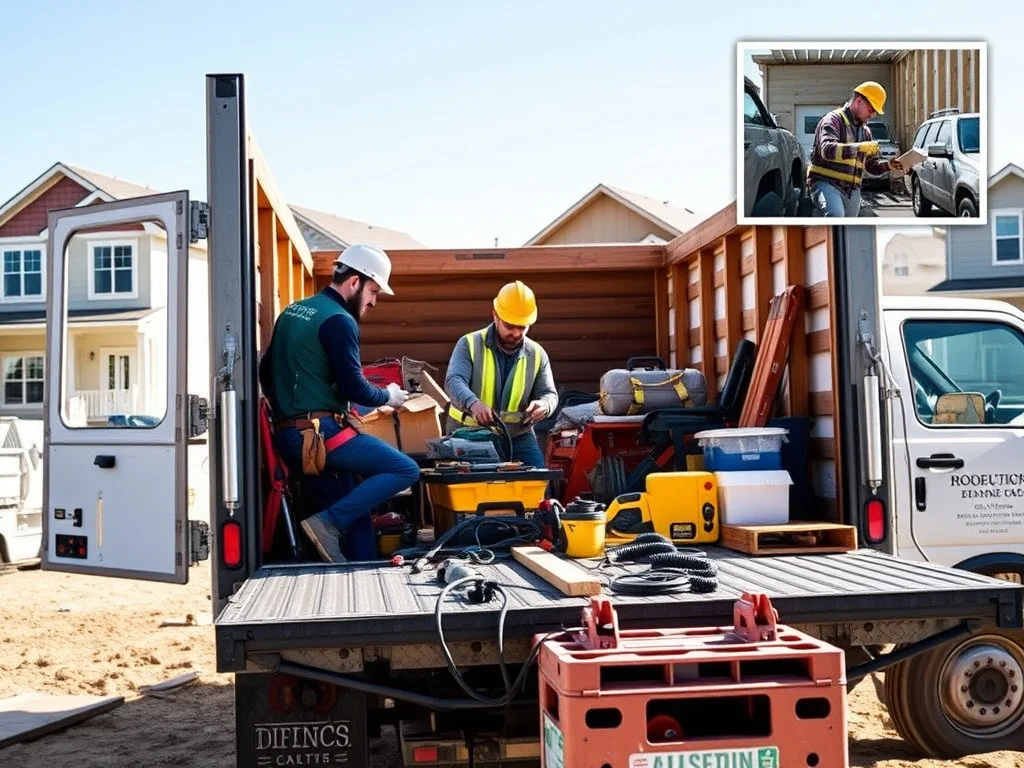
Every production builder eventually deals with a subcontractor who can't finish what they started — financial trouble, overextension across too many concurrent jobs, or work quality so poor it has to be redone by someone else. The question isn't whether this happens; across a large enough subcontractor roster and enough concurrent phases, it's a statistical certainty over time. The real question is which risk-transfer tool you use to manage it: subcontractor default insurance (SDI), traditional performance bonds, or some mix of both.
How performance bonds work
A performance bond is a three-party arrangement: the builder (obligee), the subcontractor (principal), and a surety company that guarantees the subcontractor's performance. If the subcontractor defaults, the builder files a bond claim, and the surety investigates and, if the claim is validated, steps in to complete the work — either by funding the original subcontractor's completion, bringing in a replacement, or paying out under the bond terms. This process is well-established and familiar to most construction professionals, but it does mean a third party — the surety — has real influence over the pace and shape of the resolution.
How subcontractor default insurance works
SDI is a two-party, first-party insurance policy between the builder and the insurer. There's no separate surety investigating the claim from an independent standpoint — the builder generally has more direct control over declaring a default under the policy's terms and moving quickly to bring in a replacement subcontractor, then seeking reimbursement from the insurer for the increased completion cost. For a production builder trying to protect a tight, multi-phase schedule, that speed and control can matter as much as the financial protection itself.
Where each tool tends to fit best
Performance bonds tend to make the most sense for individual, high-value, or higher-risk trade packages where a builder wants the specific guarantee and third-party oversight a surety provides — a large structural package, or a subcontractor without a long track record with the builder. SDI tends to make more sense across a builder's core, recurring subcontractor roster — the same framing crew, the same electrical sub, the same plumbing sub working across dozens of homes and multiple phases — where managing individual bonds for every single project relationship becomes an administrative burden that scales linearly with your home count.
- Performance bonds: strong fit for high-value, higher-risk, or less-established subcontractor relationships on specific trade packages
- SDI: strong fit for a stable, recurring core subcontractor roster working across many homes and phases
- Many production builders use both — SDI for the core roster, bonds for specific higher-risk packages outside it
The administrative reality at production-builder scale
Requiring individual performance bonds from every subcontractor on every phase means tracking dozens or hundreds of separate bond relationships, each with its own paperwork, renewal timing, and — if it comes to that — its own claims process. For a builder running a handful of homes a year, that's manageable. For a production builder running dozens of homes across multiple concurrent phases with a largely repeat subcontractor base, it becomes a real operational load, and one that grows every time a new phase starts.
An SDI program instead covers your enrolled subcontractor roster under one annual policy, which scales more naturally with how production builders actually work: a relatively stable group of trade partners doing the same work repeatedly across many homes, rather than a fresh one-off relationship for every individual project.
Prequalification is the foundation either way
Whether you lean on bonds, SDI, or both, the underlying risk-management step that actually reduces how often you deal with a default in the first place is the same: a documented subcontractor prequalification process covering financial condition, safety record, bonding history, and past performance. SDI carriers generally require this before extending coverage, but it's worth building regardless of which risk-transfer tool sits behind it, because prequalification is what reduces default frequency — the insurance and bonding are what manage the cost when a default happens anyway.
What SDI carriers typically expect before extending coverage
SDI isn't something a builder can simply purchase off the shelf without any operational groundwork. Carriers generally expect a documented subcontractor prequalification process before extending coverage — financial statements or a reasonable proxy for financial stability, safety record, bonding history if any, and a track record of past performance on comparable projects. This isn't just a hurdle to clear for underwriting purposes; it's also the single biggest lever a builder has for reducing how often a default happens in the first place, independent of which risk-transfer tool sits behind it.
Builders who haven't formalized a prequalification process yet often find that building one is a useful exercise on its own, separate from whether they end up choosing SDI, bonds, or both — it forces a level of discipline in vetting subcontractors that tends to pay off across every coverage line touched by subcontractor risk, not just default protection specifically.
A practical way to think about the decision
If you're trying to decide where to start, a useful frame is to separate your subcontractor base into two groups: your core, recurring trade partners who work across most of your homes and phases, and the occasional or higher-risk specialty subs brought in for specific packages. SDI tends to fit the first group well, because it's built for exactly that kind of stable, repeated relationship managed under one annual policy. Performance bonds tend to fit the second group better, where the added third-party oversight of a surety and the ability to require a bond on a single, specific package without enrolling that subcontractor in a broader annual program makes more sense.
Making the call for your operation
There's no universally correct answer between SDI and performance bonds — the right structure depends on your subcontractor roster size and stability, how many concurrent phases you're running, your existing prequalification practices, and how much control you want over the default-and-cure process versus how much you're comfortable transferring to a surety. Contractors Choice Agency helps production builders evaluate this specific tradeoff against their actual roster and development portfolio. Call 844-967-5247 or email josh@contractorschoiceagency.com to talk through what fits your operation.
Frequently asked questions
Yes — many production builders use SDI to cover their core, recurring subcontractor roster and still require individual performance bonds for specific high-value or higher-risk trade packages outside that core group.
It depends on your roster size and structure, but SDI often reduces the administrative cost of managing dozens or hundreds of individual bond relationships, even when the direct premium comparison is close, because it consolidates default risk management into one annual policy.
Generally, yes — subcontract terms typically reflect which risk-transfer mechanism applies, and subcontractors should understand what's expected of them either way, including any prequalification information they'll need to provide as part of an SDI program.
More production builder insurance guides



Ready for a real quote on your development's coverage?
Tell us about your developments and we'll build a program around how they actually operate — no generic templates, no guesswork.