Builder's Risk Insurance for Phased & Multi-Unit Developments
A deeper look at how reporting-form and master builder's risk policies are structured specifically for phased, multi-unit developments — rolling starts, periodic value reporting, and the practical mechanics of insuring a subdivision that never has just one project underway.
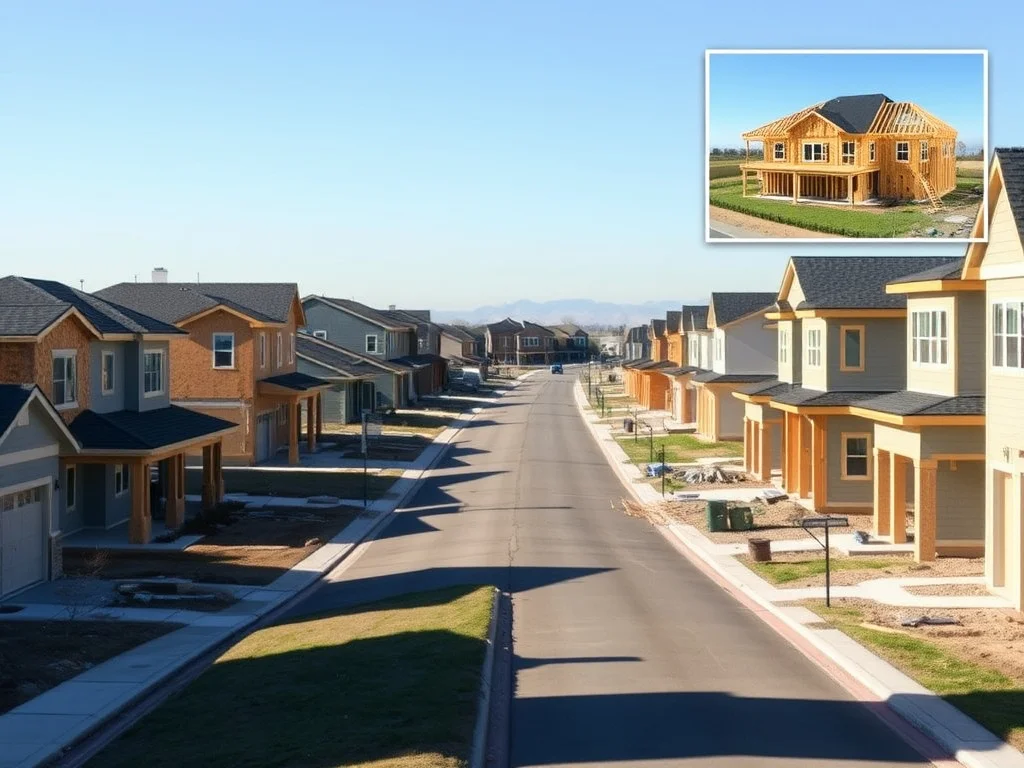
This page goes deeper into a specific mechanic covered at a summary level on our main builder's risk insurance page: how reporting-form and master builder's risk policies are actually structured and administered for a phased, multi-unit development, where new homes are constantly starting while others are finishing.
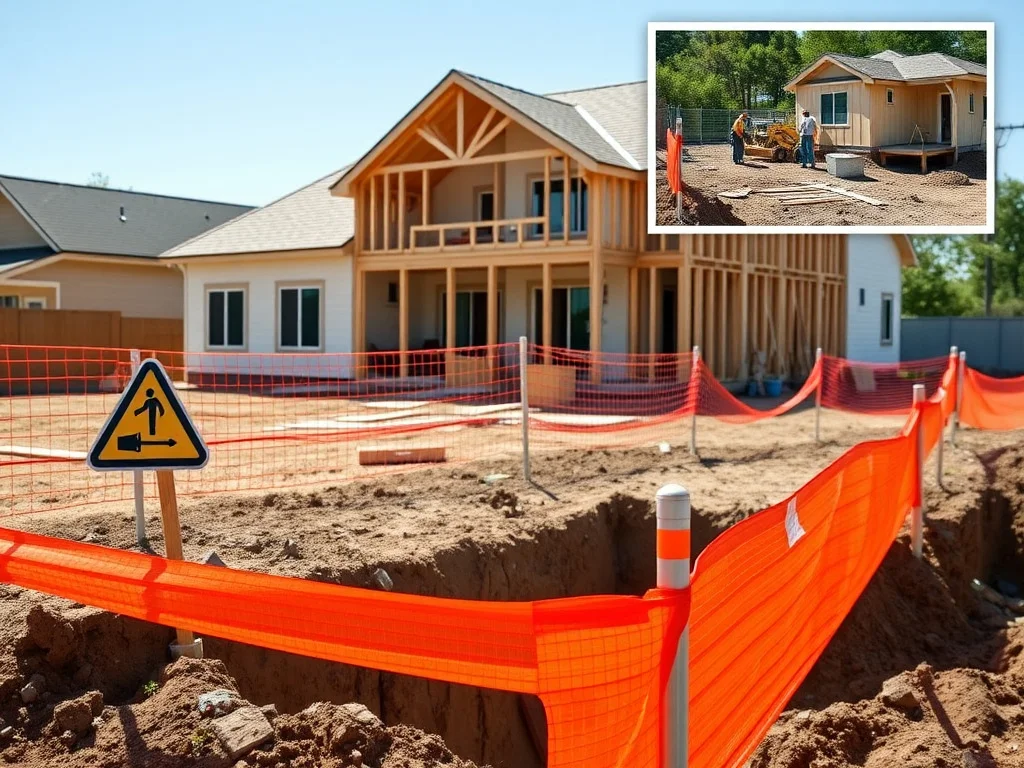
A phased development doesn't have a single construction timeline — it has as many timelines as it has active homes, staggered across the life of the project. Phase one might be closing out sales while phase four is just breaking ground, and phase two is somewhere in the middle, fully framed but not yet finished. Insuring that reality with individual, discrete builder's risk policies purchased and canceled per house creates constant administrative churn and real risk of coverage gaps in the transition windows.
Contractors Choice Agency structures reporting-form builder's risk programs specifically around a phased development's rolling schedule, so coverage tracks the development's actual construction timeline rather than forcing the development to fit a single-project insurance model. Call 844-967-5247 or email josh@contractorschoiceagency.com to talk through your phasing schedule.
What's covered
- One continuous policy that automatically extends to new homes as each phase breaks ground, without a separate policy purchase per address
- Periodic — typically monthly — value reporting that tracks actual construction-in-progress value as it escalates across active homes
- Reduced administrative burden compared to managing dozens or hundreds of individual per-house builder's risk policies
- Structured handling of the transition point when a finished model or spec home needs to move off builder's risk onto standard commercial property coverage
- Coverage that scales cleanly as a development adds new phases over a multi-year timeline
- Coordination with contractors pollution liability and commercial auto so site-wide exposures across a large development are addressed as one coherent program, not separate disconnected policies
Ideal for builders that…
- Production builders with three or more homes under construction at any given time within a single development
- Developments with a multi-year phasing schedule where new phases start well before earlier phases are fully sold out
- Builders currently managing per-house builder's risk policies who want to evaluate the administrative and cost impact of consolidating to a reporting form
- Master-planned communities with model home complexes running alongside active, ongoing phase construction
- Builders whose lender or developer contract requires clear, auditable proof of construction-in-progress insured values by phase
How monthly value reporting actually works
Under a reporting-form policy, the builder reports the total value of construction-in-progress to the carrier on a periodic basis — commonly monthly — rather than insuring every home to a fixed peak value from the day it starts. Early in a home's construction timeline, its reported value is low; as framing, systems, and finishes are completed, the value reported climbs, and premium is calculated against the values actually reported over the policy period rather than a flat assumption made at inception.
This mechanism is what makes reporting-form coverage genuinely well-suited to a phased development: at any given moment, some homes in the reported total are just starting (low value), others are mid-construction (moderate value), and others are near completion (high value) — and the policy tracks that real, blended total rather than requiring a separate insured value decision for every single address.
Managing the model-home and completed-spec transition across phases
Every phase of a development eventually produces homes that finish construction and need to transition out of builder's risk coverage — either because they're sold and closing, held as completed spec inventory, or converted into a model home for ongoing sales traffic. Getting that transition timing right, phase after phase, is one of the more operationally demanding parts of running a builder's risk program across a multi-phase development, since it's not a single event but a recurring one throughout the life of the project.
We help set up a repeatable process for flagging homes approaching substantial completion within each phase, so the shift from builder's risk to standard commercial property (for models and unsold spec inventory) or to the homeowner's policy (at closing) happens on schedule, phase after phase, without homes sitting in an ambiguous coverage gap.
- Flag homes nearing substantial completion within each active phase before the transition point arrives
- Confirm model homes converted from spec inventory move to standard commercial property coverage promptly
- Track vacancy exposure on completed-but-unsold homes that sit on the market longer than the typical marketing timeline
Why this differs from insuring a single large commercial project
A single large commercial construction project, even a big one, still has one start date and one substantial-completion date. A phased residential development has neither — it has a rolling series of both, repeated across every phase, for as long as the community continues building. That structural difference is why phased-development builder's risk isn't just 'commercial builder's risk at a bigger scale' — it requires a policy mechanism, reporting-form or master policy structure, built specifically around continuous, overlapping construction cycles rather than a single project lifecycle.
What determines the cost of this coverage
Every production builder is different. Here's what typically moves the price of this coverage up or down.
Accuracy and frequency of value reporting
Consistent, accurate periodic reporting keeps premium aligned with actual exposure and avoids under- or over-insurance disputes at claim time.
Number of homes active at any given time across all phases
A higher average concurrent home count increases the blended total insured value the reporting form is tracking.
Phasing schedule and construction cycle time
Faster average completion times per home, typical of production building, affect how long each home's value sits at peak exposure before transitioning off the policy.
Geographic and catastrophe exposure across the development footprint
Wildfire, wind/hail, and coastal exposure zones affect base rating and available deductible structures for the whole reporting-form program.
Model home and completed-spec inventory volume
How many homes sit as finished model or unsold spec inventory at a given time affects the split between builder's risk and standard commercial property needs.
FAQs about Builder's Risk for Phased Developments
A reporting-form or master policy is one continuous policy that automatically extends to new homes as they start and tracks total construction-in-progress value through periodic reporting, instead of requiring a brand-new policy purchase and cancellation for every individual address as it starts and finishes.
Most reporting-form builder's risk programs use monthly reporting, though the exact frequency is set in the policy terms — consistent, accurate reporting is what keeps premium aligned with real exposure and avoids disputes if a claim occurs.
It needs to transition off builder's risk — to standard commercial property coverage if it becomes a model home or sits as completed spec inventory, or to the buyer's own homeowners policy at closing. We help flag that transition point for each home within each active phase.
Yes — reporting-form and master builder's risk policies are specifically designed to scale as a development adds phases over a multi-year timeline, which is one of their core advantages over per-house policies for production builders.
Generally not once it's finished and being used for ongoing sales traffic rather than active construction — a completed model home typically needs standard commercial property coverage instead, which we help set up as part of managing the overall builder's risk program.
Related coverages to consider
Get your free builder's risk for phased developments quote
Tell us about your developments and we'll put together a clear, no-obligation quote — coverage built around how a production builder actually operates.