Commercial Auto Insurance for Production Builders
Commercial auto insurance covers company-owned trucks, trailers, and equipment moving materials and crews between concurrent job phases, plus hired and non-owned auto coverage for supervisors and staff who use personal vehicles for company business.
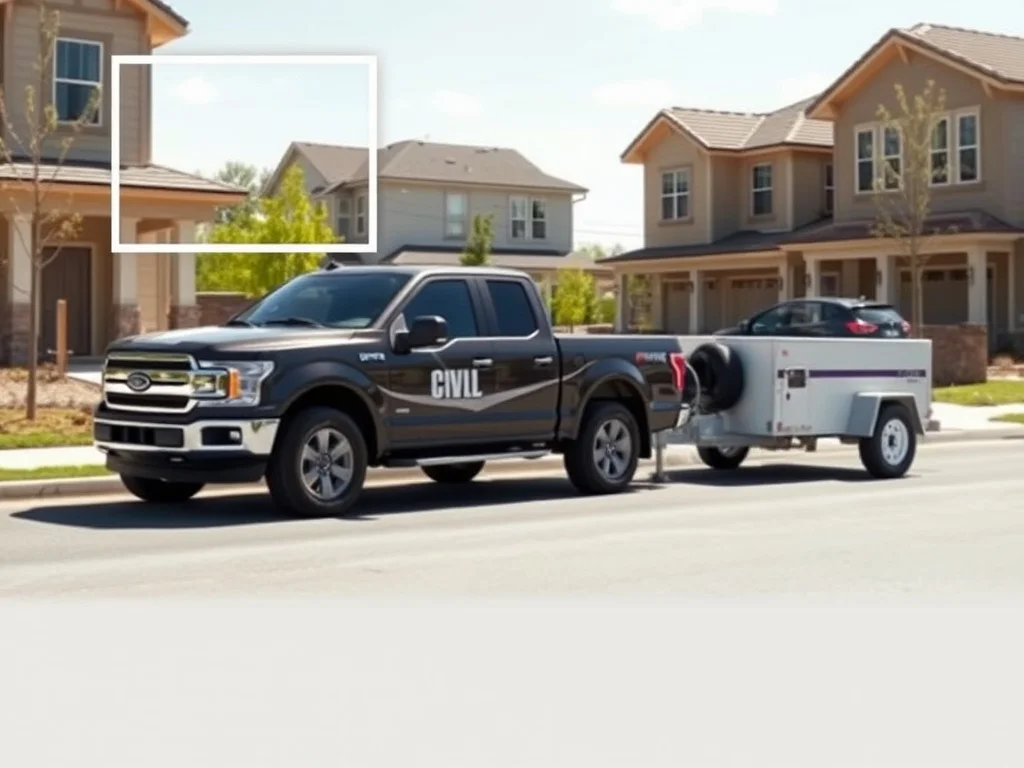
Commercial auto insurance covers vehicles owned, leased, or regularly used by your business — pickup trucks, material trailers, and any equipment-hauling vehicles moving between jobsites. For a production builder running several active phases at once, often spread across a large master-planned community or several developments in a region, vehicle movement between sites is a daily, high-frequency exposure rather than an occasional one.
That frequency matters for how the policy needs to be structured. A production builder's superintendents and project managers are often driving between multiple active phases in a single day, hauling small equipment, checking on subcontractor progress, and moving materials — exposure that a standard personal auto policy typically excludes once a vehicle is being used for business purposes, even if the vehicle itself is personally owned.
Contractors Choice Agency builds commercial auto programs for production builders that cover company-titled vehicles and trailers, and layer in hired and non-owned auto coverage for staff who use personal vehicles for company business — so a coverage gap doesn't open up simply because of which vehicle happened to be driven that day. Call 844-967-5247 or email josh@contractorschoiceagency.com for a free quote.
What's covered
- Liability coverage for bodily injury and property damage caused by a covered company vehicle in an accident
- Physical damage coverage (collision and comprehensive) for company-owned trucks and trailers
- Hired and non-owned auto (HNOA) coverage for rented vehicles and for employees using personal vehicles for company business
- Coverage for trailers hauling equipment and materials between concurrent development phases
- Medical payments and uninsured/underinsured motorist coverage for company vehicle occupants
- Support handling the paperwork and endorsements needed for company vehicles operating across multiple states or counties
Ideal for builders that…
- Production builders whose superintendents and PMs regularly drive between multiple active phases or developments
- Companies with a fleet of company-titled trucks and material trailers
- Builders who reimburse staff mileage for using personal vehicles on company business and want to close the gap a personal auto policy leaves open
- Developments spread across a wide geographic footprint where daily inter-site travel is routine, not occasional
- Any production builder that hauls small equipment or materials between sites rather than relying solely on subcontractor-provided transport
The daily inter-site travel exposure production builders carry
A single custom home builder might drive to one jobsite a day. A production builder's field staff routinely move between three, five, or more active phases in the same workday — checking framing progress on one, meeting an inspector on another, and hauling small tools or materials to a third. Each of those trips is a discrete auto exposure, and the frequency alone raises the odds of an incident compared to a builder working one site at a time.
We size commercial auto coverage around that actual travel pattern — not just the number of vehicles you own, but how many active sites your team is realistically moving between on a given day.
Hired and non-owned auto: closing the personal-vehicle gap
Many production builders don't provide a company vehicle for every superintendent or project manager — some staff use their own trucks and get reimbursed mileage. The problem is that a personal auto insurance policy typically excludes or sharply limits coverage once a vehicle is being used primarily for business purposes, which day-to-day site-hopping for a production builder often is.
Hired and non-owned auto (HNOA) coverage is built specifically to close that gap — extending the company's liability protection to cover incidents involving personal vehicles used for company business, and rental or borrowed vehicles used on a temporary basis, such as during a company vehicle's repair.
- HNOA responds to the company's liability exposure when an employee causes an accident driving their own vehicle on business
- It does not typically cover physical damage to the employee's personal vehicle itself — that stays with the employee's own auto policy
- Rental vehicles used temporarily for company business are typically addressed under the same HNOA extension
What determines the cost of this coverage
Every production builder is different. Here's what typically moves the price of this coverage up or down.
Number and type of company vehicles
Pickup trucks, trailers, and any heavier equipment-hauling vehicles are rated differently based on size, use, and value.
Radius of operation and inter-site travel volume
How far apart your active phases and developments are, and how often staff move between them, directly affects exposure and pricing.
Driver records across staff who operate company or personal vehicles for business
Motor vehicle record history for drivers covered under the policy, including HNOA drivers, is a meaningful underwriting factor.
Hired and non-owned auto exposure
The number of staff regularly using personal vehicles for company business affects how HNOA coverage is rated.
Physical damage coverage elected
Whether you carry collision/comprehensive on company vehicles, and at what deductible, is a direct lever on total premium.
FAQs about Commercial Auto Insurance
Often not adequately — personal auto policies typically exclude or sharply limit coverage once a vehicle is being used primarily for business purposes, which routine inter-site travel for a production builder usually is. Hired and non-owned auto (HNOA) coverage is designed to close that specific gap for the company's liability exposure.
Trailers used to haul equipment or materials between jobsites generally need to be scheduled on the commercial auto policy as well — an unscheduled trailer can create a coverage gap in the event of a loss involving the trailer itself.
More concurrent active phases typically means more daily inter-site travel by staff, which increases exposure and is reflected in pricing — this is one of the more distinctive rating factors for production builders compared to a single-project custom builder.
Generally no — HNOA is designed to protect the company's liability exposure when a personal or rented vehicle is used for business, not to repair the employee's own vehicle, which remains the responsibility of that employee's personal auto policy.
Auto insurance requirements are set at the state level, so a fleet or HNOA program operating across multiple states needs to comply with each state's specific requirements — we structure multi-state commercial auto programs so coverage travels correctly with your developments.
Related coverages to consider

Get your free commercial auto insurance quote
Tell us about your developments and we'll put together a clear, no-obligation quote — coverage built around how a production builder actually operates.