Completed Operations Coverage for Multi-Unit Developments
Completed operations coverage is the part of a general liability policy that responds to claims arising after your work is finished and the home is sold — the defining long-tail exposure for production builders, whose repeated floor plans and specifications mean a single systemic issue can affect many homes across a development at once.

Completed operations, formally the products-completed operations hazard within a general liability policy, is the coverage that responds to claims arising from work you performed in the past, once that work is finished and, for a home builder, typically once the home has been sold and closed. It's distinct from ongoing operations coverage, which addresses claims that happen while construction is actively underway.
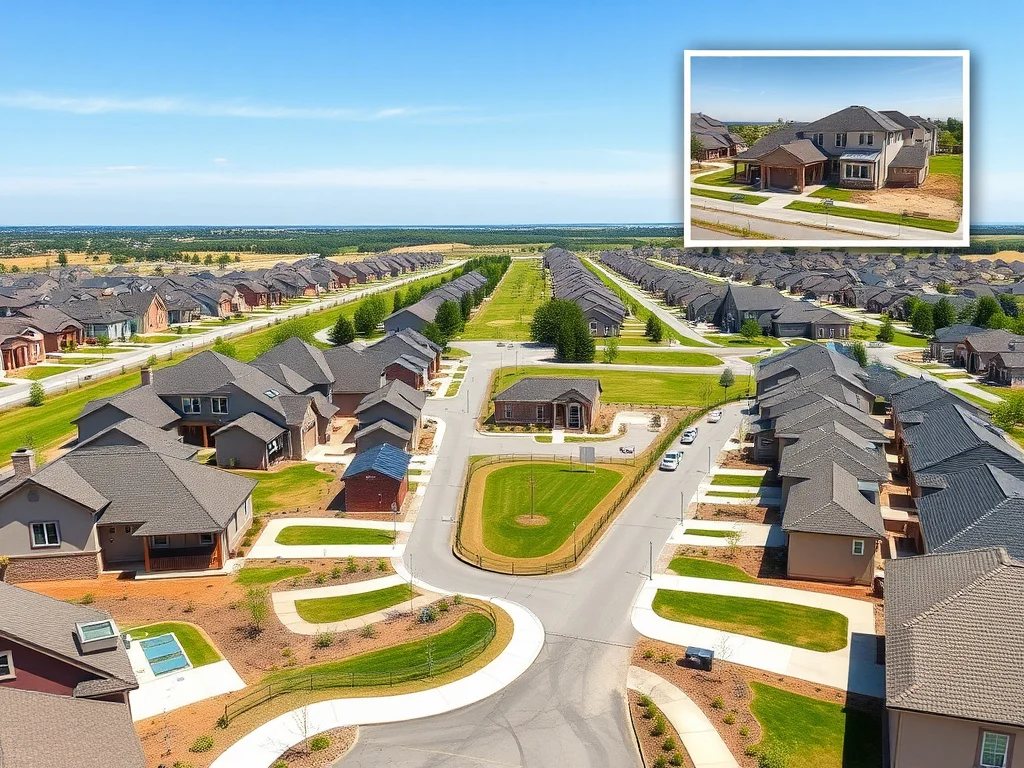
This distinction matters enormously for production builders specifically. Because a tract or production development repeats the same floor plans, structural systems, and finish specifications across dozens or hundreds of homes, a single systemic issue — a stucco application method, a roofing detail, a plumbing manifold design, a foundation practice — isn't necessarily isolated to one house the way it would be for a custom builder. It can surface as a wave of related claims from different homeowners across the development, sometimes years apart, well within a state's construction-defect statute of repose.
Contractors Choice Agency structures completed operations coverage for production builders with that batch-exposure reality in mind — continuous coverage across policy periods, adequate aggregate limits sized for a multi-home development, and awareness of how a systemic issue across repeated specifications changes the claims picture compared to a single custom project. Call 844-967-5247 or email josh@contractorschoiceagency.com for a free quote.
What's covered
- Coverage for construction-defect claims discovered after a home is sold and closed, within the policy's products-completed operations terms
- Protection against the batch-claim scenario where a systemic issue across a repeated floor plan or specification affects multiple homes
- Legal defense costs for completed-operations claims, which can be substantial even for claims ultimately found without merit
- Awareness and structuring around state-specific construction-defect statutes of repose that extend the exposure window
- Coordination with your active general liability program so completed and ongoing operations aren't treated as disconnected coverage decisions
- Guidance on maintaining continuous coverage across carrier changes so past phases don't end up with a gap in completed-operations protection
Ideal for builders that…
- Production builders who have completed and sold one or more phases of a development and want their completed-operations exposure properly reviewed
- Builders repeating the same floor plans, systems, or finish specifications across many homes in a single development
- Companies operating in states with longer construction-defect statutes of repose, where completed-operations exposure extends further past closing
- Builders who have changed general liability carriers over the life of a multi-year development and want to confirm no coverage gap exists for earlier phases
- Any production builder evaluating whether current aggregate limits are adequately sized for the multi-home, multi-year nature of a development
Why batch exposure is the defining completed-operations risk for production builders
A custom home builder's completed-operations exposure is generally bounded by one house. A production builder's is bounded by every home built to the same specification across a phase or development — which means a single systemic issue has the structural potential to generate related claims from many different homeowners, often at different points in time as the issue becomes apparent to each household individually.
This is precisely why completed operations deserves its own deliberate review for a production builder, rather than being treated as an automatic, unremarkable extension of general liability. Aggregate limits, continuity of coverage across renewals and carrier changes, and awareness of which specifications were used across which phases all become materially more important when a single defect pattern could touch dozens of homes rather than one.
Continuity across policy periods and carrier changes
Because completed-operations claims can surface years after the underlying work was performed, which policy period actually responds often depends on the specific trigger language in play and the timing of when the claim is made or the damage occurred, subject to your policy's terms. A gap in coverage — even a short one caused by switching carriers or briefly lapsing between renewals — can create real disputes over which policy, if any, is responsible for a delayed-discovery claim.
We help production builders maintain continuous completed-operations coverage across the full multi-year life of a development, and think through the implications before switching general liability carriers mid-project.
- Confirm continuous, unbroken general liability coverage across every phase and every renewal of a multi-year development
- Document which floor plans, specifications, and subcontractors were used on which phases, in case a defect pattern needs to be traced later
- Review aggregate limits periodically as total completed home count grows across a development's lifetime
What good documentation looks like for a production builder
Because a completed-operations claim can surface long after a phase is finished, and because production builders repeat specifications across many homes, having a clear internal record of what was built where — which subcontractor performed which trade work, which specification version was in use, and when — makes a meaningful difference if a defect pattern needs to be investigated or defended years later. This documentation discipline is a practical risk-management step alongside the insurance coverage itself, not a substitute for it.
What determines the cost of this coverage
Every production builder is different. Here's what typically moves the price of this coverage up or down.
Total completed and sold home count across the development's history
More completed homes built to the same specification set increases the theoretical scope of a batch-defect claim, which factors into appropriate limits.
State construction-defect statute of repose
States with longer statutes of repose extend how far past closing a completed-operations claim can still be brought, affecting long-tail pricing.
Continuity of coverage across carriers and renewals
Gaps in coverage history can complicate — and in some cases increase the cost of — securing full completed-operations protection.
Number of standardized specifications and floor plans repeated across the development
Fewer, more-repeated specifications concentrate batch exposure differently than a highly varied floor-plan mix.
Prior completed-operations claims history
A track record of construction-defect claims, and how they were resolved, is one of the most significant renewal pricing factors for this coverage.
FAQs about Completed Operations Coverage
Ongoing operations coverage responds to claims that arise while construction is actively underway. Completed operations responds to claims arising from work that's already finished — for a home builder, typically after the home has been sold and closed, sometimes years later.
Yes, structurally — if a systemic issue exists in a specification, system, or installation method repeated across many homes in a phase, it can surface as separate claims from different homeowners over time, which is a distinguishing exposure for production builders compared to single-project custom builders.
That depends on your state's construction-defect statute of repose, which sets the outer window during which a defect claim can still be brought. Some states allow claims many years after completion, which is why continuous, unbroken coverage matters well past a phase's closing date.
It depends on the trigger language and terms of both the old and new policies — this is exactly the kind of transition that needs careful review, since a poorly-timed carrier switch can create ambiguity about which policy responds to a claim discovered after the switch but related to work performed under the old policy.
Yes — detailed records of which floor plan, specification version, and subcontractor were used on each home make a meaningful difference if a defect pattern needs to be traced or defended years later, and are a practical complement to the insurance coverage itself, not a replacement for it.
Related coverages to consider

Get your free completed operations coverage quote
Tell us about your developments and we'll put together a clear, no-obligation quote — coverage built around how a production builder actually operates.