Contractors Pollution Liability Insurance for Land Development
Contractors pollution liability fills a gap standard general liability policies typically exclude — pollution conditions arising from mass grading, earthwork, and soil disturbance across large-acreage developments, plus mold and moisture-intrusion claims that are among the most common construction-defect allegations on production homes.
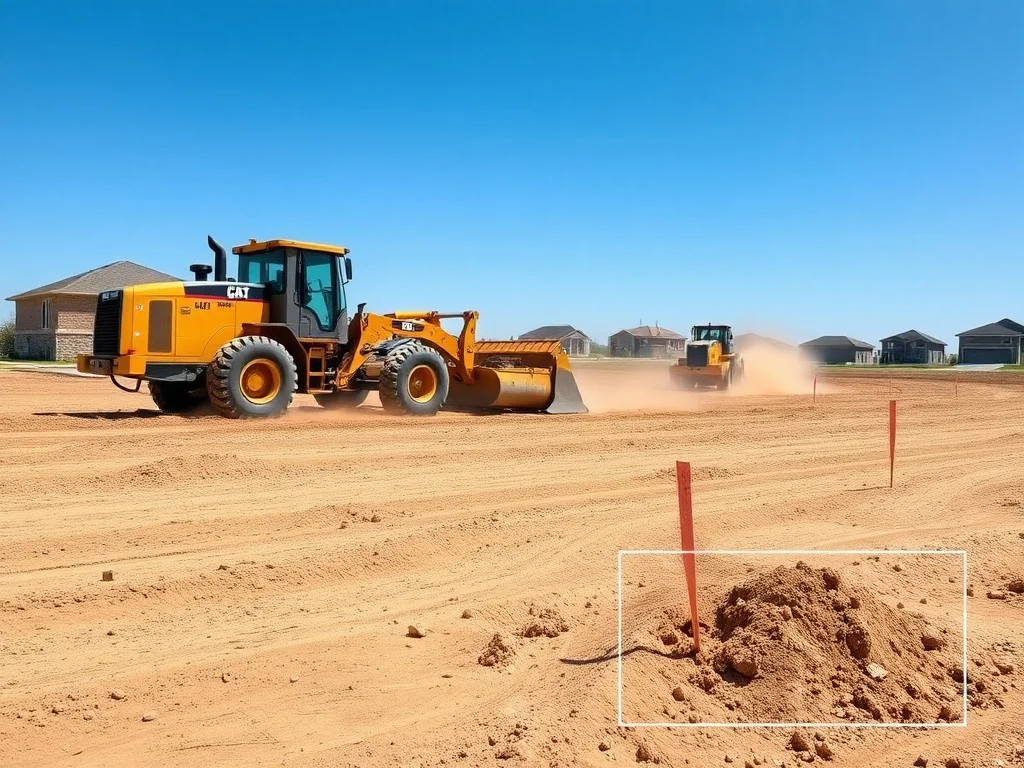
Contractors pollution liability (CPL) covers claims and cleanup costs arising from a pollution condition connected to your construction operations — contaminated soil or groundwater disturbed during grading, or mold and moisture intrusion resulting from construction work, among other pollution-related exposures. Standard general liability policies typically contain a pollution exclusion, which means this coverage sits outside, not inside, a builder's core liability program unless purchased separately.
This gap matters more for production builders than it might for other trades, because large-acreage subdivision development routinely involves mass grading and significant earthwork across many acres before a single home is framed — exactly the kind of activity that can disturb pre-existing soil or groundwater contamination, or create new pollution conditions, at a scale a single custom-home lot rarely approaches. On top of the grading exposure, mold and moisture intrusion — frequently excluded or sharply limited under general liability pollution exclusions — are consistently among the most common construction-defect allegations made against production homebuilders after homes are occupied.
Contractors Choice Agency helps production builders evaluate contractors pollution liability as part of a complete program, particularly for developments involving significant sitework, grading, or a documented history of moisture-intrusion claims in the region or product type. Call 844-967-5247 or email josh@contractorschoiceagency.com for a free quote.
What's covered
- Coverage for pollution conditions — including soil and groundwater contamination — arising from grading, excavation, and earthwork operations
- Coverage for mold and moisture-intrusion claims that general liability's standard pollution exclusion typically leaves out
- Cleanup cost coverage for a covered pollution condition, in addition to third-party bodily injury and property damage claims arising from it
- Coverage structured for large-acreage development sitework, not just an isolated small-scale pollution event
- Coordination with general liability and completed operations coverage so a pollution-adjacent construction-defect claim (like a moisture intrusion allegation) isn't caught in a gap between policies
- Support evaluating pre-existing site conditions, such as prior land use, that could affect the pollution risk profile before mass grading begins
Ideal for builders that…
- Production builders undertaking mass grading or significant earthwork across large-acreage developments
- Builders developing on sites with a documented history of prior industrial, agricultural, or other land use with potential contamination risk
- Companies building in climates or with building envelope designs where moisture intrusion is a recognized regional construction-defect pattern
- Developments where general liability pollution exclusions have already created a coverage dispute or gap on a past claim
- Any production builder whose site-development scope goes meaningfully beyond a single-lot excavation
Why mass grading is a distinct pollution exposure for production builders
Developing a subdivision typically starts with grading and earthwork across the entire parcel — cutting and filling large areas, managing stormwater, and preparing pad sites for dozens or hundreds of homes, often before a single house is framed. That scale of ground disturbance is fundamentally different from excavating one custom-home lot, both in the volume of soil moved and in the odds of encountering pre-existing contamination on a large, previously undeveloped or previously-used parcel.
Because general liability policies typically carry a pollution exclusion, this specific phase of a production development — arguably the very first phase, before vertical construction even begins — can be one of the least-insured parts of the whole project unless contractors pollution liability is specifically added.
Mold and moisture intrusion: a construction-defect pattern general liability often excludes
Mold and moisture-intrusion claims are consistently among the most frequently alleged construction-defect issues against production homebuilders, often tied to building envelope details — flashing, drainage planes, stucco or siding installation — repeated across many homes in a development. Many general liability policies specifically exclude or sharply sublimit mold and pollution-related claims, which means a builder relying on general liability alone can find this exact, common claim type falls outside coverage.
Contractors pollution liability is typically the mechanism that closes this specific gap, and because moisture intrusion is a construction-defect pattern that can repeat across a development's shared specifications, it deserves the same batch-exposure thinking that applies to completed operations coverage generally.
Site history and pre-existing conditions
Before mass grading begins on a new parcel, understanding the site's prior use — agricultural, industrial, or otherwise — can meaningfully affect both the actual pollution risk and how a CPL policy is underwritten. Some CPL policies distinguish between pollution conditions the builder's own operations create versus pre-existing conditions merely disturbed by construction, and that distinction matters both for coverage terms and for how a claim would ultimately be handled.
What determines the cost of this coverage
Every production builder is different. Here's what typically moves the price of this coverage up or down.
Scope and scale of grading/earthwork per development
Larger-acreage mass grading operations carry more inherent pollution exposure than modest single-lot excavation.
Site history and prior land use
Parcels with documented prior industrial, agricultural, or unknown use typically carry higher underwriting scrutiny and potentially higher pricing.
Regional moisture-intrusion claim patterns
Climate and typical building envelope design for your product line affect the underlying frequency of mold/moisture claims in a given market.
Prior pollution or moisture-intrusion claims history
A builder's own claims history on pollution-adjacent construction-defect issues is a significant renewal pricing factor.
Coverage trigger and policy term structure
Whether the policy is written on an occurrence or claims-made basis, and the length of any extended reporting period, affects both pricing and long-tail protection.
FAQs about Contractors Pollution Liability
Typically not — most general liability policies contain a pollution exclusion, which means grading-related pollution conditions, including disturbed contaminated soil or groundwater, generally fall outside standard general liability coverage unless contractors pollution liability is purchased separately.
Often excluded or sharply limited — mold and related pollution conditions are commonly carved out of general liability policies, which is one of the main reasons production builders add contractors pollution liability, since moisture intrusion is a frequently alleged construction-defect issue for this building type.
Even undeveloped land can carry pre-existing pollution conditions from historical agricultural or other use, and mass grading itself can create new pollution exposure regardless of prior land use — a site history review as part of evaluating CPL coverage is worth doing before assuming a clean site has no exposure.
Contractors pollution liability is specifically scoped around exposures tied to construction and contracting operations — grading, excavation, and the construction process itself — rather than the broader environmental liability programs designed for facility owners or industrial operations. It's the more directly applicable product for a homebuilder's construction-phase pollution exposure.
Most contractors pollution liability policies cover both cleanup/remediation costs for a covered pollution condition and third-party bodily injury or property damage claims arising from it, subject to the specific policy's terms — worth confirming both elements are included when reviewing a quote.
Related coverages to consider

Get your free contractors pollution liability quote
Tell us about your developments and we'll put together a clear, no-obligation quote — coverage built around how a production builder actually operates.