General Liability Insurance for Tract-Home & Production Builders
General liability is the foundation of a production builder's insurance program — third-party bodily injury and property damage coverage across every active jobsite in a development, extended to cover claims that surface after homes are sold through the products-completed operations hazard.
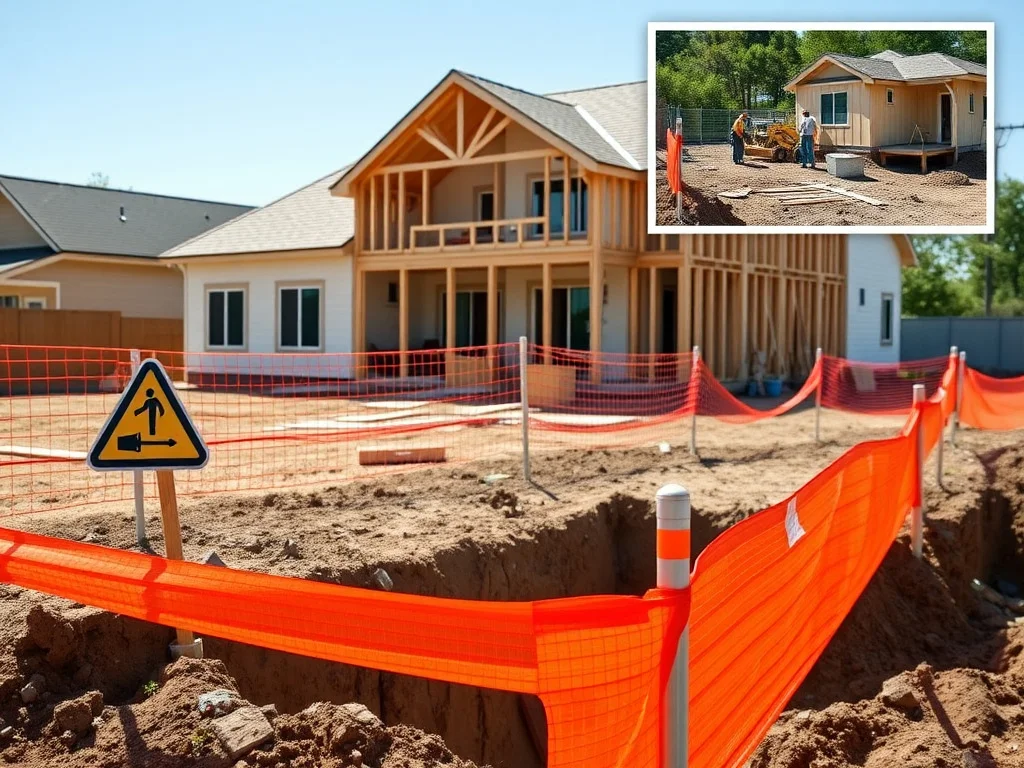
General liability insurance responds when someone other than your own employee is hurt, or their property is damaged, because of your construction operations. On a single custom home that might mean a delivery driver tripping over a stacked pallet of lumber. On a tract or production development, the same exposure exists across every phase running at once — model homes open to the public, spec homes mid-framing, and homeowners who have already closed and moved in, all inside the same subdivision boundary at the same time.
That layering is exactly why production builders can't treat general liability as a single, one-size-fits-all limit purchased once and forgotten. A subdivision with fifty homes at various stages of completion carries a materially different exposure profile than one finished custom home, and the policy needs to reflect that — adequate per-occurrence and aggregate limits, clean handling of additional insured status for the dozens of subcontractors on site, and a products-completed operations extension broad enough to survive the years between closing and the end of a state's statute of repose.
Contractors Choice Agency structures general liability for production builders around how a development actually runs: concurrent phases, a rotating subcontractor roster, model-home foot traffic, and the long tail of completed-operations exposure that doesn't end when the last house in a phase closes escrow. Call 844-967-5247 or email josh@contractorschoiceagency.com for a free, no-obligation quote.
What's covered
- Bodily injury and property damage claims from third parties — homebuyers, delivery drivers, inspectors, and the general public — across every active jobsite in a development
- Products-completed operations hazard, extending coverage to claims arising after a home is sold and closed, not just during active construction
- Legal defense costs, even for claims that are ultimately found groundless — defense is typically provided in addition to policy limits
- Medical payments coverage for minor injuries on a jobsite or in a model home, regardless of fault, without a liability determination
- Additional insured endorsements for developers, lenders, and municipalities that require them as a condition of a subdivision approval or construction loan
- Personal and advertising injury coverage — libel, slander, and copyright/trade-dress disputes tied to marketing a development's model homes and signage
Ideal for builders that…
- Production and tract builders running multiple concurrent phases within one master-planned community
- Builders who keep model homes open to walk-in traffic while adjacent phases are still under active construction
- Companies managing a rotating roster of subcontractors who need to be added as additional insureds project-by-project
- Builders in states with construction-defect statutes of repose that extend liability exposure well past the closing date
- Any production builder whose lender or municipality requires proof of minimum general liability limits before releasing permits or draws
Why one liability limit rarely fits a whole subdivision
A custom home builder can reasonably size a general liability policy around a single project's value and duration. A production builder can't use the same math, because the exposure isn't one project — it's a rolling portfolio of homes at different stages, often inside the same physical boundary, sharing roads, utility trenches, and staging areas with homes that already have families living in them.
That overlap is where a surprising share of production-builder liability claims originate: a homeowner in a completed phase tripping in a utility trench still being worked by a different phase's subcontractor, or a delivery truck for one house damaging a driveway that belongs to another. We size limits and structure the policy around the development as a whole, not phase-by-phase, so a claim's location inside the subdivision doesn't become a coverage argument.
Products-completed operations: the exposure that outlives the sale
The products-completed operations hazard is the part of a general liability policy that responds to claims arising from work you completed in the past, not work happening today. For a production builder, this is not a theoretical clause — it's the mechanism that responds when a construction-defect claim surfaces two, five, or even ten years after a subdivision phase closed, which is common in states with extended statutes of repose.
Because production builders repeat the same floor plans, systems, and finish packages across dozens or hundreds of homes in a development, a defect isn't necessarily isolated to one house. A stucco application method, a roofing detail, or a plumbing manifold used across an entire phase can generate a wave of related claims years apart, well after the crews that built them have moved on to other jobs. Coverage needs to be written and maintained with that batch exposure in mind — see our dedicated page on completed operations coverage for multi-unit developments for how we structure that.
- Confirm products-completed operations is included, not excluded or sublimited, on every policy period
- Keep continuous coverage across policy renewals — gaps create disputes over which policy year responds to a delayed-discovery claim
- Track which floor plans, subcontractors, and material specs were used on which phase, in case a defect pattern emerges later
Additional insureds and certificates across a rotating subcontractor roster
Production builders typically work with the same core group of subcontractors across many homes, but the mix shifts phase to phase, and each sub's own certificate of insurance needs to name the builder as an additional insured with the right endorsement language, on every active project. Managing that paperwork across dozens of active homes is one of the most common places production builders get exposed — not because coverage doesn't exist, but because the certificate trail doesn't hold up when a claim is investigated.
We help set up a repeatable process for collecting, verifying, and renewing subcontractor certificates and additional insured endorsements as new phases start, so coverage intent and coverage reality stay aligned.
What determines the cost of this coverage
Every production builder is different. Here's what typically moves the price of this coverage up or down.
Annual home starts / revenue
General liability premium is typically rated on payroll and gross receipts — the number of homes started and their sale price directly drives exposure and cost.
Number of concurrent active phases
More simultaneous phases inside one development increases the odds of an overlap claim between completed and active areas, which underwriters price for.
Subcontractor default and safety history
A documented subcontractor prequalification and safety program can meaningfully improve terms versus an unmanaged roster.
States of operation and statute of repose
States with longer construction-defect statutes of repose typically carry higher completed-operations pricing, since the tail exposure is longer.
Prior claims and construction-defect history
A clean claims history, especially on completed-operations claims, is one of the largest levers on renewal pricing.
Limits and additional insured requirements
Higher required limits from lenders, municipalities, or master-plan developers raise premium but are often non-negotiable conditions of building.
FAQs about General Liability Insurance
General liability covers third-party bodily injury and property damage claims — someone other than your employee getting hurt or having their property damaged. Builder's risk covers physical damage to the structures you're building themselves, from causes like fire, wind, theft, or vandalism during construction. Most production builders carry both, and they respond to very different kinds of losses.
It can, through the products-completed operations hazard, as long as that extension is included in the policy and coverage has been maintained continuously. This is why continuous, unbroken general liability coverage matters even after a phase is fully sold and closed — a gap in coverage can create disputes over which policy year is responsible for a defect discovered years later.
Not typically — most production builders carry general liability at the company level with limits sized for the whole active portfolio of phases, rather than buying a separate policy per phase. What does need to happen per-phase is making sure subcontractor certificates and additional insured endorsements are current for whichever homes are actively under construction.
Yes, if the claim relates to your construction work and falls under the products-completed operations hazard — for example, a covered defect discovered after move-in. It will not cover normal wear and tear, maintenance issues, or matters unrelated to your construction work.
There's no single standard — required limits are often set by lenders, municipalities, or a master-plan developer's contract requirements, and appropriate limits also scale with the number of concurrent phases and total portfolio value. We review your specific developments and contractual requirements to recommend limits rather than defaulting to a generic number.
Related coverages to consider
Get your free general liability insurance quote
Tell us about your developments and we'll put together a clear, no-obligation quote — coverage built around how a production builder actually operates.